
When the stream stalls and the video call freezes, even a mesh system can’t always fix it. Sound Media runs Cat6 cable through finished homes across the Denver metro. We plan each route through attics, crawl spaces, and existing chases, keeping openings small. Each run is tested and labeled, so you know exactly what was installed and where.
The signs of a weak connection usually start small. One TV buffers, or a call freezes in one room. Before long, you’re moving to a different spot in the house or restarting the router just to get through the day. By the time homeowners call us, they have usually been living with several of the same problems, and these are the ones we hear about most:
The signal fades in a bedroom, basement, or back office no matter where the router sits.
The TV farthest from the router keeps buffering.
The mesh system helped at first, but connection drops are still occurring.
Video calls lag or freeze in the home office.
TVs, tablets, cameras, and laptops are all competing for the same bandwidth.
Older Denver homes make reliable Wi-Fi connectivity even more challenging, as brick and plaster absorb wireless signals. Additionally, multiple levels and finished basements can put the router a long way from where you need it the most.
If any of this sounds like your house, it’s worth asking whether the rooms that matter should have hardwired internet instead of relying on Wi-Fi.
Wiring a house that’s already finished comes down to planning. Here is how a job goes:
We walk the house with you and look at where devices live, where the equipment will go, and how the home is built.
We map each run through attics, crawl spaces, closets, and existing chases. In a brick bungalow or mid-century ranch, the crawl space or basement ceiling often provides the path.
We pull cable along the planned routes and make small openings only where a route requires one.
Where we do have to open a wall or ceiling, we leave the opening clean and ready for patching.
Every cable is terminated and tested before we call it done.
Each run is labeled at both ends, so the next person who touches your network knows what goes where.
Most homes don’t need a cable in every room. Cables work best where a dropped connection has a noticeable impact, like the desk you work at or the TV you stream on. During the site walk, we go through your home room by room and decide where a wired connection will make the biggest difference.
A wired drop keeps video calls and large file transfers off the Wi-Fi.
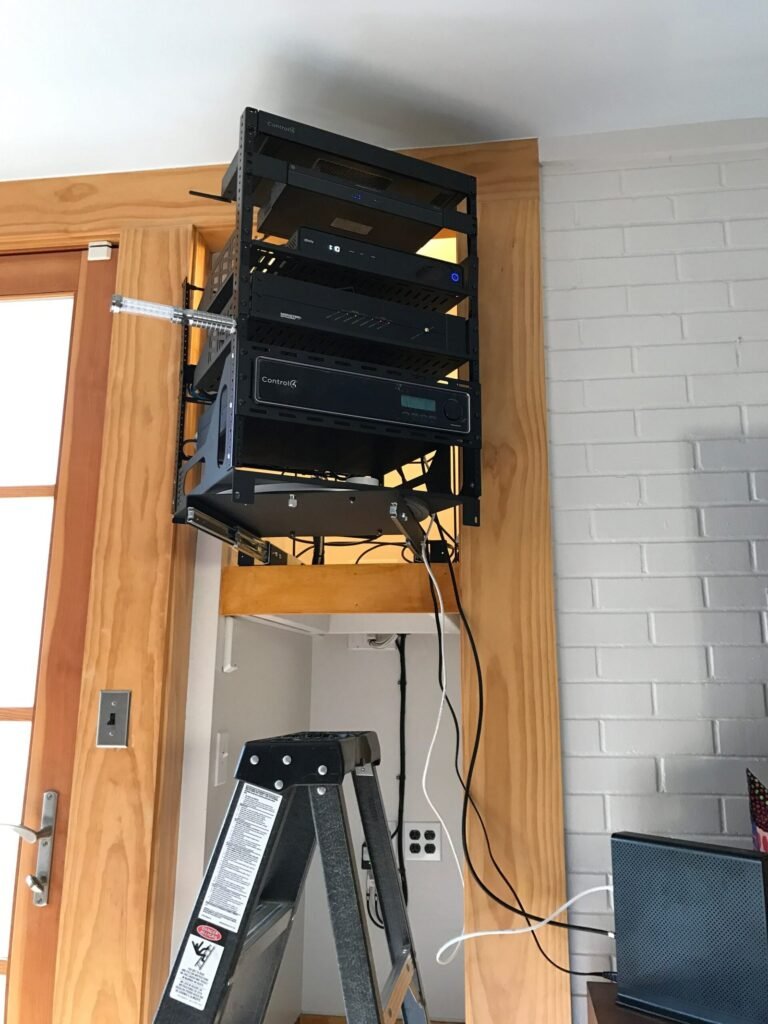
Streaming and gaming boxes behind the TV get a dedicated connection. If you’re planning a full media room or home theater, our team can assist with that too.
Ceiling- or wall-mounted access points need a wire behind them to perform well.
Wired cameras don’t compete for wireless bandwidth, and they can tie into a larger home automation system.
Consoles and PCs that prioritize consistent response times perform best over a cable connection.
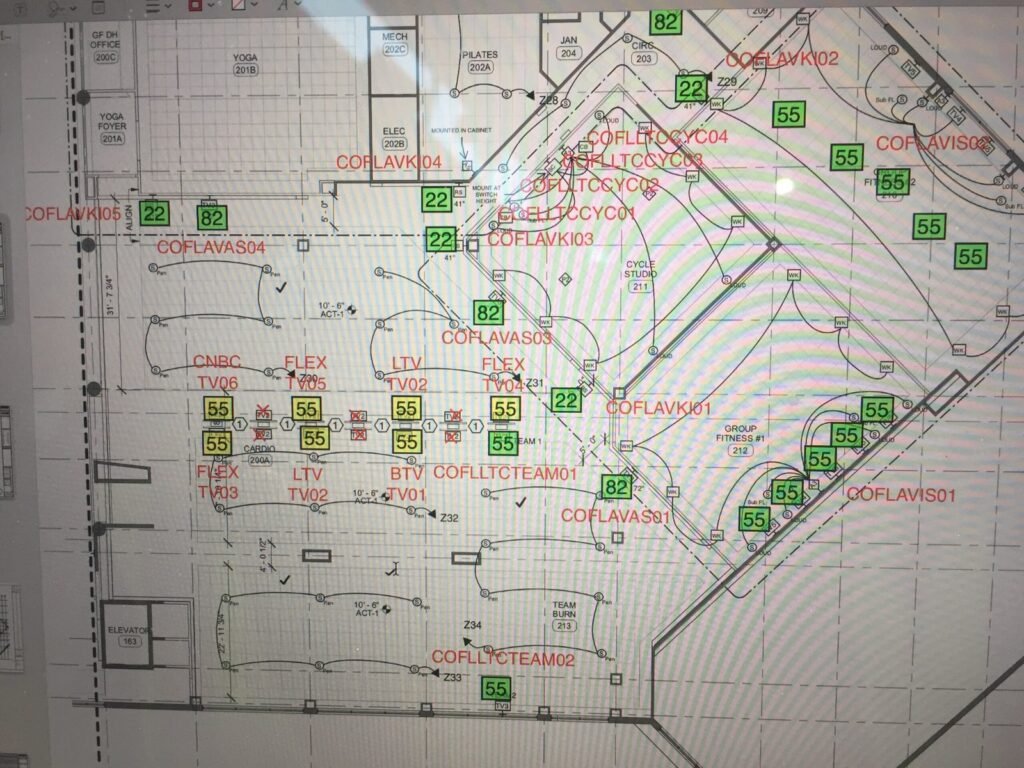
Wi-Fi shares airtime among the devices on your network, so each one waits its turn on the same signal. Walls weaken that signal, and the networks next door compete for the same airspace, so the wait gets longer. A Cat6 cable provides a device with a dedicated path back to your network. That is why a wired connection can stay steady in a room where the Wi-Fi struggles.
Cat6 handles gigabit speeds easily over typical home distances, and it can carry 10 gigabit over shorter runs. That is more than most households need today. That reliable, fast connection matters in Colorado, where many people work from home, because one room with a weak connection can disrupt an entire workday.
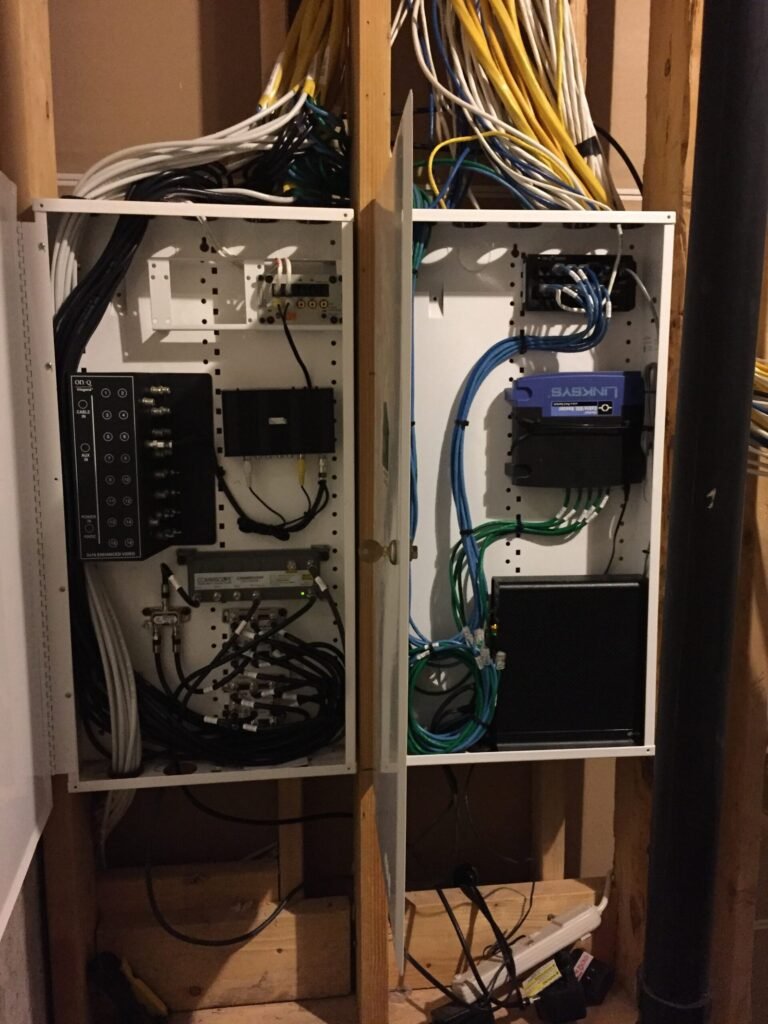
Wi-Fi still makes sense for devices that move around the house, like phones and tablets, and it works better when its access points are wired back to the network. If you want the wireless side planned around that wired backbone, we also handle network and Wi-Fi design.
Retrofit wiring is priced based on the work involved, and that work varies from house to house. We don’t quote over the phone because the price depends on what’s inside your walls.
The biggest factor is how hard each path is to reach. A drop from an accessible attic takes less labor than one that has to work around framing in a two-story home with a finished basement. Distance matters too, since a longer run takes more time and more cable, and each additional drop adds to that total. Each cable also has to be terminated and tested, then labeled at both ends, and that work adds time to every drop.
Older homes can add surprises, too, since earlier remodels change what’s behind a wall. That is why the free consultation matters. Once we have seen the paths, the proposal explains what’s included and why.
If you’ve already bought cable, we can pull it for you. Our one-year warranty covers our labor on the job, but it doesn’t cover materials you supply.
If you’d rather we supply the cable, both our labor and our materials fall under that warranty. If you already have cable on hand, bring the box to the consultation, and we’ll tell you honestly whether it’s worth using.
Sound Media is family-owned and operated, and the way we treat your home comes from how we run the company. We believe in open, accountable communication, so you know what we’re doing and why before we start. We also care about doing the work well, which is why we stay with you from the free in-home consultation through the finished installation.
Here is the track record behind that:
We wire homes across the Denver metro, including:
Arvada, Aurora, Boulder, Broomfield, Castle Rock, Centennial, Denver, Evergreen, Golden, Highlands Ranch, Lakewood, Littleton, Lone Tree, Parker, and Thornton.
We work to avoid or minimize making any openings in drywall. Most routes go through attics or crawl spaces, so many walls stay closed. Some locations need a small opening. When that does occur, we leave openings clean and ready for patching.
It depends on the number of drops and the difficulty of the routes. A few drops in an accessible home move faster than a larger house with a finished basement. After the consultation, your proposal gives a realistic timeline for your home.
Cat6 handles gigabit speeds comfortably, and 10 gigabit over shorter runs, which covers what most homes need today. Cat6a is thicker and costs more to install. It makes sense when you want 10 gigabit over longer runs. We’ll talk through which one fits your home at the consultation.
In brick bungalows and mid-century ranches, we plan routes around brick and plaster, using attics, crawl spaces, and basement ceilings. If a room needs a small opening, we tell you during the site walk before any work begins.
Yes, and it’s more routine than most people expect. We map paths from the attic down and from the basement ceiling up. If a particular room needs a small access opening, we tell you before we start.
Yes, for phones, tablets, and anything that moves. Cat6 gives TVs, desks, and access points a dedicated connection, and wired access points make the Wi-Fi in between stronger.
 *Proud three-time winner of the “Best of Mile High” award.


 303-564-3440